Category: Battery & Power Components
Component: 18650 Lithium-Ion Cells
Inspection Method: Weight Screening vs. Controlled Discharge
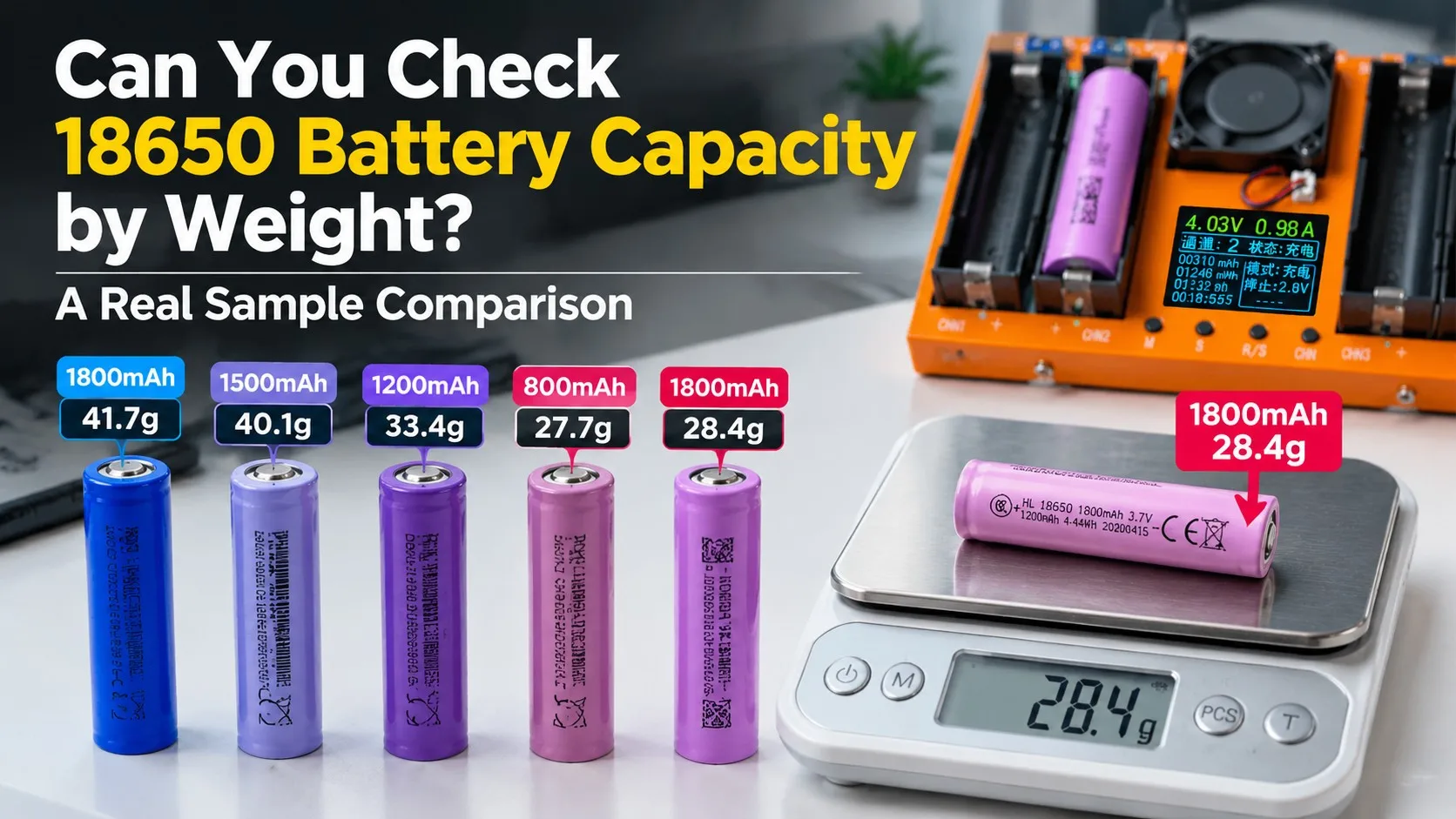
A real sample comparison: Weighed five 18650 lithium-ion cells with labeled capacities from 800mAh to 1800mAh on a digital scale beside a battery analyzer.
Scope & Measurement Note: Weight readings in this article represent single measurements of specific physical samples demonstrated during testing. They do not constitute universal manufacturing baselines or proof of deliberate misrepresentation without controlled laboratory discharge testing.
Can You Check 18650 Battery Capacity by Weight? A Real Sample Comparison
18650 lithium-ion batteries are widely used in cordless consumer electronics and small appliances, including portable fans, vacuum cleaners, and tire inflators.
When sourcing battery-powered products from China, buyers often rely on the capacity printed on the battery label. But how can you tell whether the specification deserves further investigation?
One simple starting point is weight.
In a recent sample comparison, I weighed several 18650-format lithium-ion cells with different labeled capacities. The most interesting finding was that two samples labeled 1800mAh had substantially different weights.
The lighter cell was approximately 32% lighter than the other 1800mAh sample (28.4g vs. 41.7g).
Does that prove the battery capacity is overstated? No. But it raises a critical question worth investigating before approving a supplier's samples for mass production.
1. What Did the Battery Weighing Test Reveal?
I compared five battery samples using a digital precision scale. The capacities were read directly from the sample labels, and the weights were recorded during the testing session:
📺 Field Video: Same size battery. Different reality.
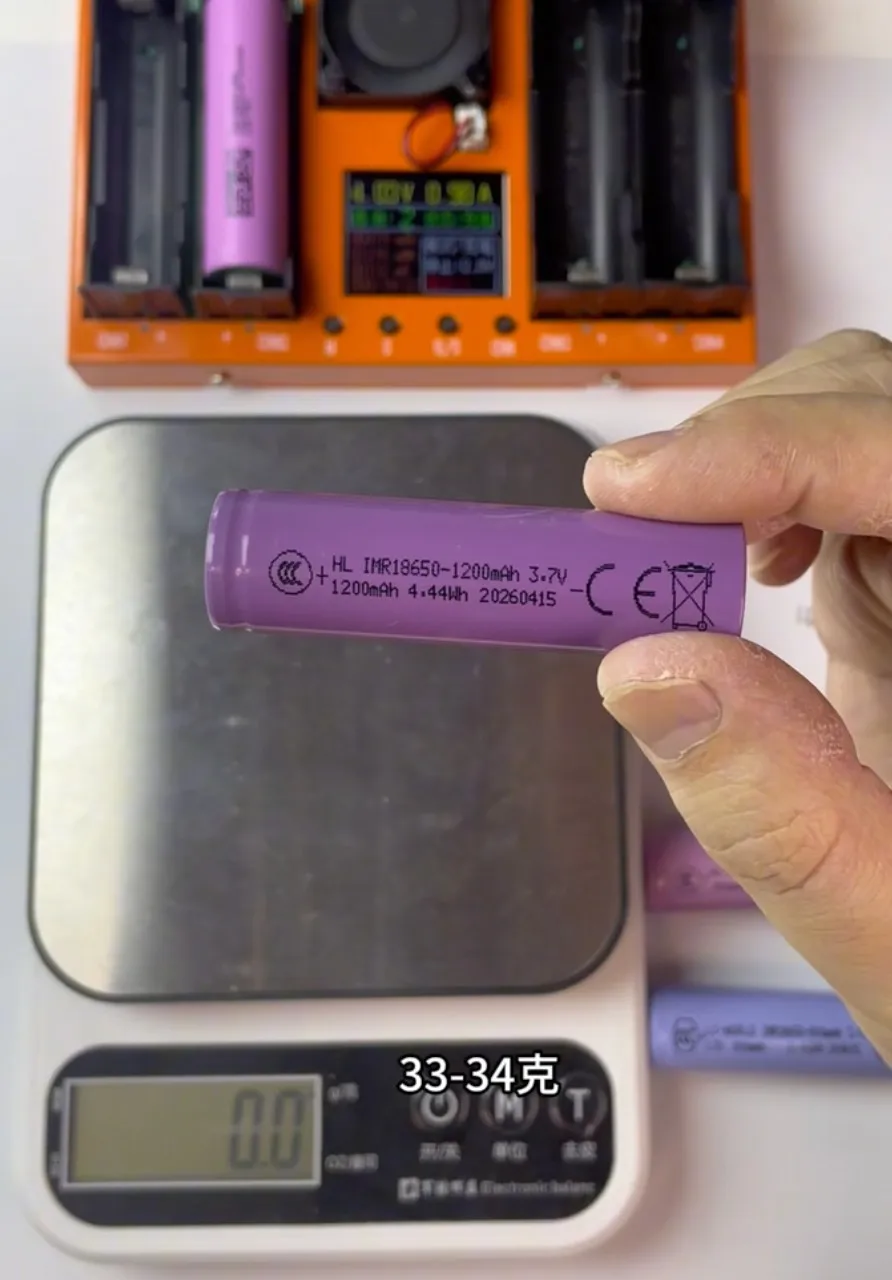
1200mAh 3.7V (4.44Wh)
Weight: 33.4g — Noticeable weight step-down reflecting thinner active jelly roll.
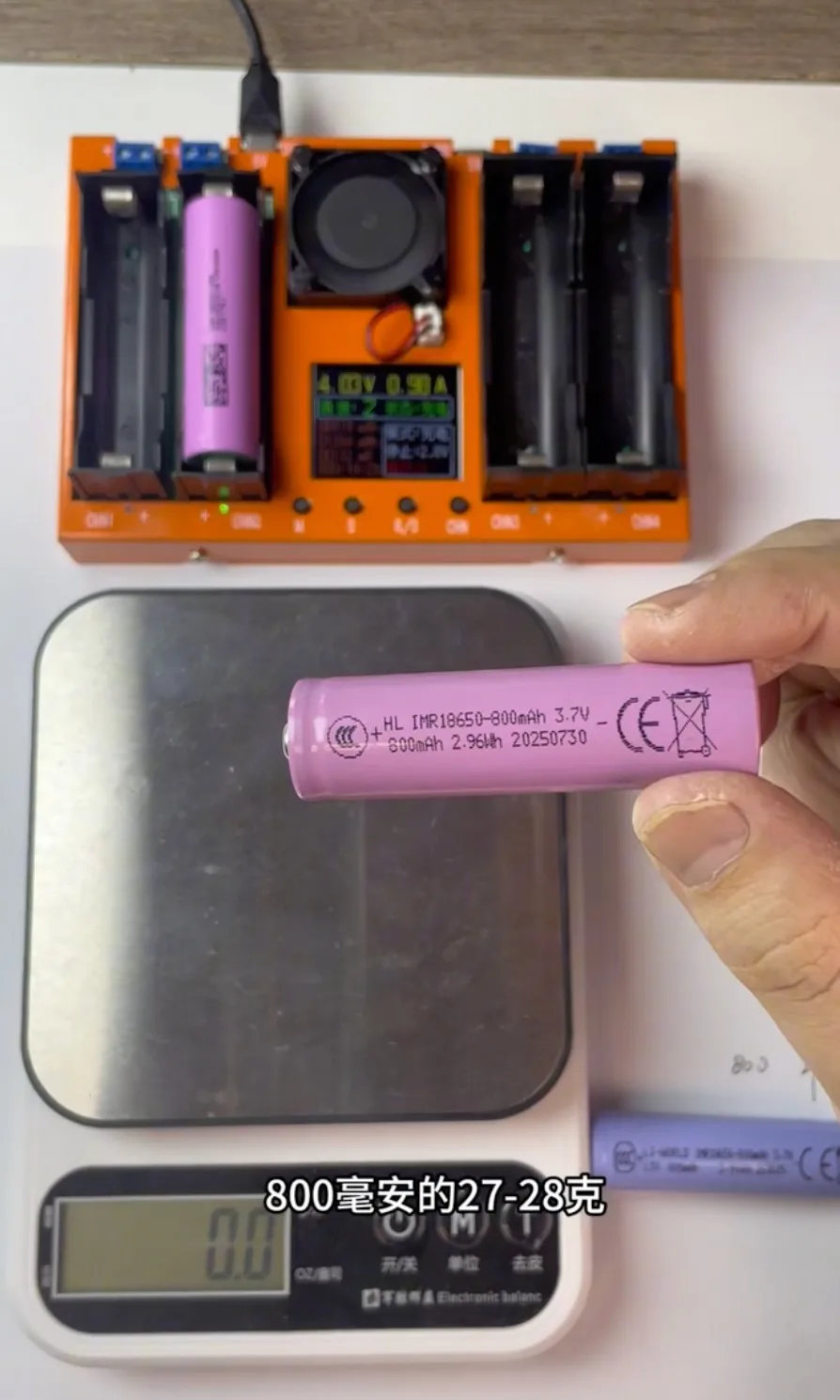
800mAh 3.7V (2.96Wh)
Weight: 27.7g — Similar in physical mass to the 28.4g cell labeled 1800mAh.
The Key Finding: Two 1800mAh Samples, Two Very Different Weights
Sample A weighed 41.7g, while Sample B weighed only 28.4g.
The difference was 13.3g, meaning Sample B was approximately 31.9% lighter than Sample A.
This is a substantial physical anomaly that warrants further investigation if the two cells are intended to have comparable electrical specifications and runtime in a finished product.
However, weight alone cannot establish which cell has the correct capacity. Different cell designs, internal materials, and manufacturing specifications can affect total weight. The important question is not simply which battery is heavier—it is whether each cell delivers the capacity and performance claimed by its manufacturer under load.
2. Can Battery Weight Reveal an Inflated Capacity Rating?
Weight can be a useful first-stage screening indicator, but it is not a direct measurement of electrical capacity.
A lithium-ion cell's weight depends on multiple internal construction factors:
- Steel can thickness and top-cap CID (Current Interrupt Device) mechanism
- Cathode and anode active material loading density and thickness
- Copper and aluminum current collector foil thickness
- Electrolyte volume and separator specifications
- Internal winding length (jelly roll tightness and void ratio)
Two cells with the same nominal capacity may not weigh exactly the same. Likewise, a heavier cell does not automatically have a higher usable capacity.
In this comparison, the 1500mAh sample weighed 40.1g, while one of the 1800mAh samples weighed only 28.4g (closer to the 27.7g measured for the 800mAh cell).
Core Engineering Rule: Weight is an effective, non-destructive screening tool to flag anomalies, not conclusive legal proof of capacity fraud. To determine whether a battery meets its rated capacity, controlled electrical discharge testing is mandatory.
3. How to Verify the Actual Capacity of an 18650 Battery
A proper capacity test measures how much electrical charge a cell can deliver under specified conditions. For procurement teams and product verification, the following 5-step process is standard practice:
1
Step 1: Verify the Cell Specification & Datasheet
Record the model number, manufacturer, nominal voltage, rated capacity, and official datasheet. Confirm that the physical sample corresponds to the model quoted by the supplier. Request traceable documentation before proceeding.
2
Step 2: Charge Under Defined CC/CV Conditions
Use a calibrated battery analyzer or programmable DC power supply. Follow the manufacturer's specified standard charging protocol (typically Constant Current / Constant Voltage at 0.5C up to 4.20V ±0.05V, cutoff at 0.02C).
3
Step 3: Measure the Discharge Capacity (0.2C Standard)
Discharge the cell at a controlled constant current (e.g., 0.2C or 0.5C) at 25°C ±2°C until it reaches the specified cutoff voltage (typically 2.75V or 3.0V). Record the delivered capacity in mAh and total energy in Wh.
4
Step 4: Compare with the Rated Specification
Evaluate measured capacity against rated nominal capacity. A single measurement is not enough to establish the quality of an entire production batch; test multiple samples across different lot numbers.
5
Step 5: Check Performance Beyond Capacity
Evaluate AC internal resistance (IR at 1kHz, mΩ), voltage drop under high-current surge, temperature rise during continuous discharge, protection PCB cutoff timing, and cycle-life degradation curves.
4. Why This Matters for Small Appliance Sourcing
Battery specifications affect more than the cell itself—they determine product runtime, motor torque consistency, manufacturing cost, and consumer review ratings.
Consider a cordless small appliance such as a portable tire inflator or handheld turbo fan. If the selected cells deliver 30% less usable capacity than quoted, the finished product will suffer from premature low-battery cutoffs and overheating.
Before approving a Chinese supplier for mass production, procurement teams should evaluate:
-
Component Specification: Does the supplied cell match the quoted brand, model, chemistry, and continuous discharge rating?
-
Sample Performance: Do measured discharge curves and capacity test results support the factory's claims?
-
Production Consistency: Can the supplier provide batch traceability and guarantee that mass production cells match the approved golden samples?
5. A Practical Checklist for Importers
Before signing a purchase order for battery-powered hardware, require the supplier to provide:
- The exact cell manufacturer, origin, and model number (e.g., HL IMR18650)
- The official manufacturer datasheet with 0.2C / 1.0C discharge curves
- Sample discharge capacity test reports from an independent or calibrated bench
- Batch production dates and traceability markings on the shrink sleeve
- AC internal resistance (mΩ) specifications across production lots
- Battery pack BMS / PCM protection circuit specifications (overcharge, overdischarge, short circuit, NTC thermal cutoff)
- Mandatory export compliance documentation: UN38.3 test report, MSDS, Drop Test Report, and Sea/Air Transport Safety Certificates
Conclusion: Verify the Specification, Not Just the Label
This sample comparison revealed a notable difference in weight between two cells labeled 1800mAh: 41.7g versus 28.4g.
That weight difference is a compelling reason to investigate, not sufficient evidence to declare either battery defective or misrepresented without testing.
A digital scale provides a fast, non-destructive initial screen. A controlled discharge test delivers the verifiable engineering proof required to confirm actual capacity under load.
For global sourcing teams, the rule is straightforward: do not rely on printed labels when component performance determines your product's market success.
CHINA PRODUCT DISCOVERY & SOURCING
Need to Verify Battery Specs or Source Cordless Appliances?
BaiSourcing helps global brands, retailers, and distributors discover promising products, inspect component BOMs, verify supplier battery specifications, and manage OEM/ODM manufacturing in China.
📦 Explore Related Products
