
From Hand-Built Prototype to 50,000 Units: Navigating EVT, DVT, and PVT in China
Building 1 flawless sample by hand is completely different from manufacturing 10,000 units on a high-speed assembly line. Here is the exact 4-stage engineering roadmap 10-year factory PMs use to prevent tooling disasters and high return rates.
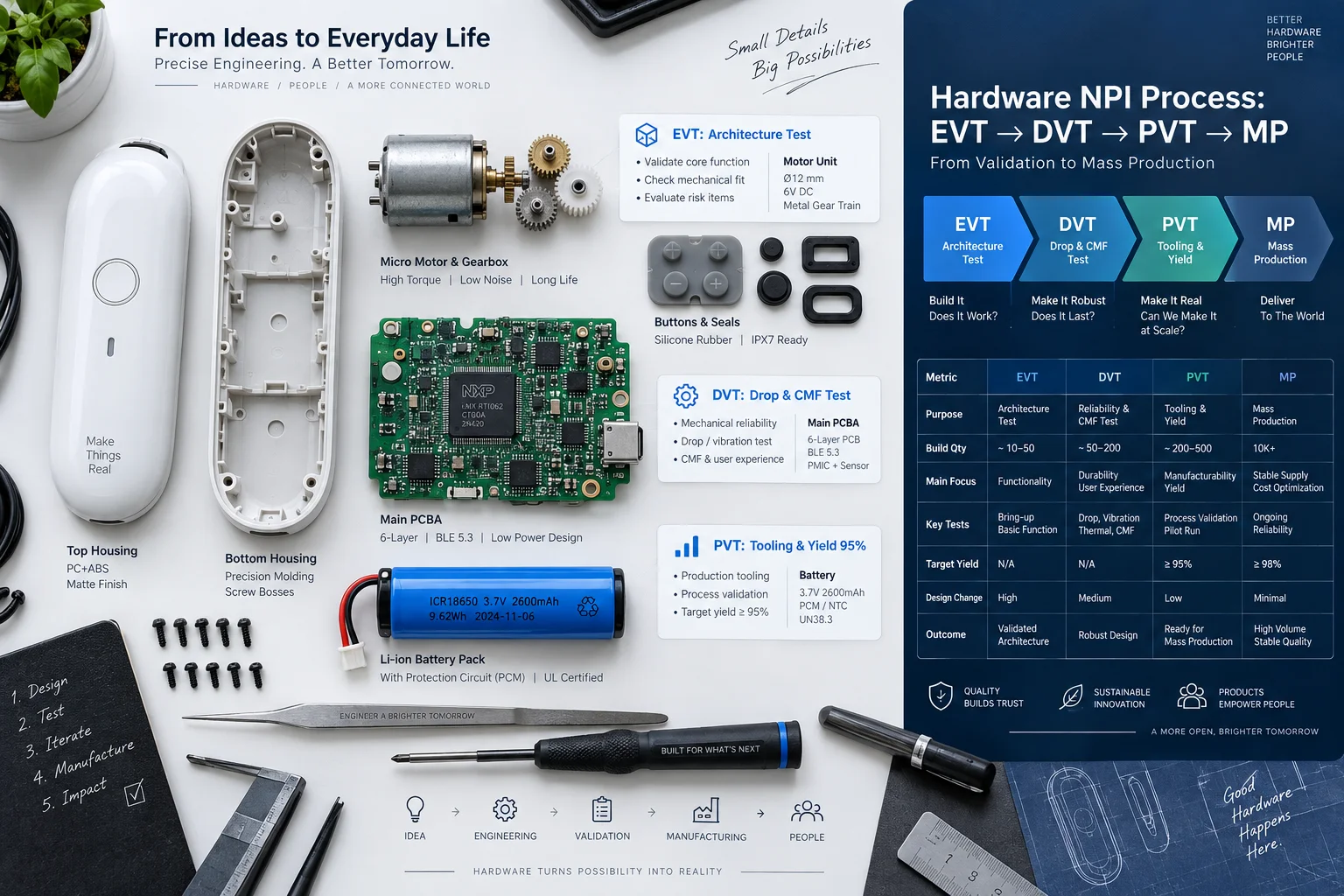
Fig 1.0: Hardware New Product Introduction (NPI) framework — validating architecture, reliability, line yield, and mass output.
Executive Takeaway for Hardware Brands & Importers
The most expensive mistake in overseas manufacturing is skipping PVT (Production Verification Test) to rush launch dates. While EVT proves functional feasibility and DVT validates environmental reliability, PVT is the only stage that proves the factory assembly line can build your product at a >95% first-pass yield.
The Most Expensive Mistake in Hardware Sourcing
When developing a custom consumer electronics device, smart grooming tool, or personal appliance in China, the most frequent point of failure is rushing straight from a 3D-printed golden sample into mass production (MP).
The nightmare scenario is remarkably predictable:
- The supplier sends a hand-crafted prototype that works smoothly.
- The buyer signs off and wires the 30% tooling and mass production deposit.
- Three months later, 10,000 units arrive overseas with misaligned plastic clips, sticky power buttons, high acoustic vibration, and a 15% return rate.
Experienced Chinese factories and veteran Project Managers (PMs) do not gamble on single samples. They enforce a disciplined 4-stage validation pipeline: EVT → DVT → PVT → MP.
The Factory PM’s Field Notes: The 4 NPI Milestones
Below is the authentic production roadmap from our factory audit records:
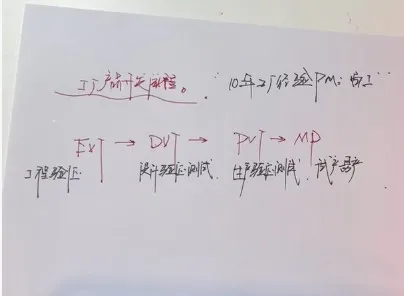
Fig 2.0: Authentic engineering notes from a 10-year factory PM outlining EVT, DVT, PVT, and Mass Production.
↓
1. EVT (Engineering Verification Test) → Validate Architecture & Schematics
↓
2. DVT (Design Verification Test) → Validate Tooling & Reliability
↓
3. PVT (Production Verification Test) → Validate Line Yield & Assembly SOP
↓
4. MP (Mass Production) → Commercial Scale Output (AQL 1.5/2.5)
Stage-by-Stage Breakdown: Key Goals & Red Flags
1. EVT (Engineering Verification Test): Does it Work?
Primary Goal: Confirm that the structural form factor, electrical schematics, and core components (motor, battery, PCBA, MCU) work together.
- Typical Batch: 10 to 50 units (using CNC prototypes, 3D SLA resins, quick-turn PCBAs).
- Critical Tests: Power efficiency, thermal dissipation, motor RPM, and structural clearance (preventing pinched wires).
- Auditor Red Flag: If a factory insists on cutting production steel molds before EVT is signed off, walk away. Modifying hardened steel costs thousands of dollars and weeks of delay.
2. DVT (Design Verification Test): Can it Survive the Real World?
Primary Goal: Verify the product using actual injection-molded parts from T1 tooling with final cosmetic finishes (CMF).
- Typical Batch: 50 to 200 units.
- Critical Tests: 1.2-meter drop tests onto concrete, button cycle aging (20,000+ clicks), thermal shock (-20°C to +60°C), waterproof sealing (IPX5/IPX7), and pre-compliance scans (CE, FCC, RoHS, UN38.3).
- Auditor Red Flag: Never freeze surface texturing or electroplating before DVT passes all mechanical drop tests.
3. PVT (Production Verification Test): Can the Line Build it Efficiently?
Primary Goal: Validate the assembly line, factory jigs, testing stations, and assembly worker cycle times (Takt Time).
- Typical Batch: 200 to 1,000 units (built strictly by regular line workers, not R&D engineers).
- Critical Tests: First Pass Yield (FPY target >95%), automated screwdriving torque verification, adhesive curing consistency, and master shipping carton drop tests.
- Auditor Red Flag: If PVT yield is below 90%, do NOT approve full mass production. The factory must re-calibrate jigs and resolve root-cause defects.
4. MP (Mass Production): High-Volume Execution
Primary Goal: Deliver the full commercial purchase order on schedule with consistent quality, controlled scrap rates, and verified AQL 1.5/2.5 pre-shipment inspections.
Comparison Matrix: EVT vs. DVT vs. PVT vs. MP
Buyer Checklist: 4 Golden Rules for Hardware NPI in China
- 1. Never Skip PVT for Speed: Skipping PVT to save 2 weeks is the #1 cause of catastrophic recall rates on Amazon or retail shelves.
- 2. Retain Signed Golden Samples at DVT: Keep two identical DVT signed samples—one sealed at the factory and one kept at your office as the immutable benchmark for inspection.
- 3. Lock Down Change Management (ECN): Require the factory to submit an Engineering Change Notice (ECN) before altering any component, resin supplier, or firmware version.
- 4. Deploy Independent On-Site Audit at PVT: Have an independent engineering auditor on the line during PVT to verify real cycle times, jig calibration, and defect logging.
Joe Bai
Founder & Sourcing Auditor at BaiSourcing
Specializing in hardware teardowns, BOM audits, and on-site supplier verification in China. Helping global brands avoid expensive sourcing mistakes. Connect on LinkedIn →
Planning a New Hardware Product in China?
Preparing to cut injection molds, run pilot builds, or audit factory production lines in China? We provide on-site engineering verification and NPI management to protect your tooling investment.