
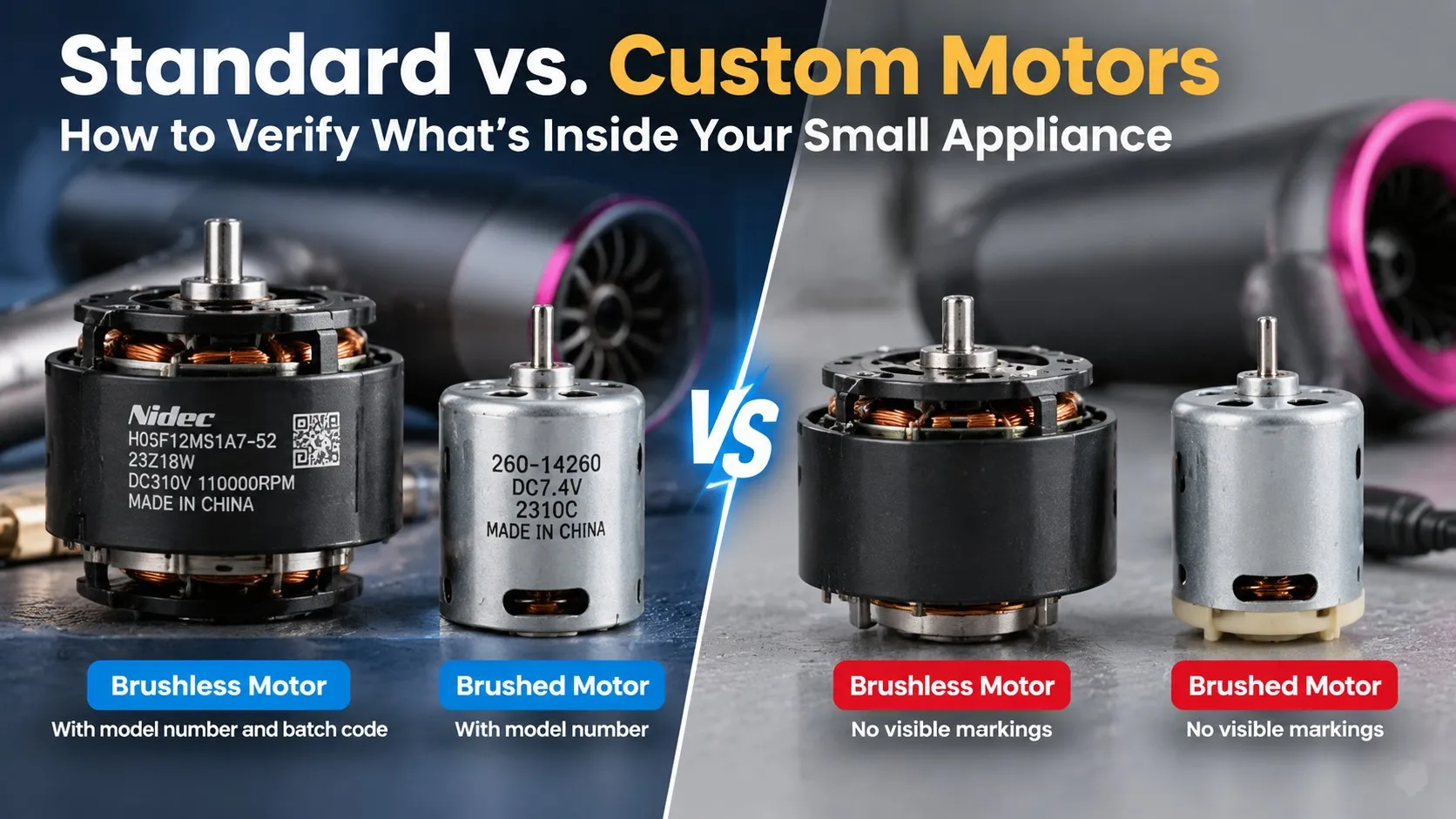
Standard vs. Custom Motors: How to Verify What’s Inside Your Small Appliance
How can you tell whether a small appliance uses a standard motor or a custom-developed motor? A quick look at the motor can provide useful clues, but appearance alone is not enough. For buyers sourcing hair dryers, electric shavers, portable fans, and other small appliances from China, verifying the actual motor specification is essential to evaluating product quality, supplier claims, and manufacturing costs.
At BaiSourcing, we use component-level teardowns to examine what is inside consumer appliances. Motor markings are one of the first things worth checking—but they are only the beginning of the verification process.
1. Why Motor Selection Matters in Small Appliance Sourcing
The motor is often the primary cost and performance driver in an electromechanical appliance. Its design directly dictates rotational speed, torque, operating acoustics, energy efficiency, thermal rise, and overall product lifespan.
For example, two hair dryers may look identical on the outside but use completely different motor architectures inside. Differences in operating speed (e.g., 20,000 RPM universal motor vs. 110,000 RPM high-speed BLDC motor), electrical characteristics, and aerodynamic integration with the impeller will dramatically alter real-world user experience.
When evaluating a supplier, procurement teams should distinguish between three categories:
- Standard Motor (Off-the-Shelf): An existing public motor model produced in high volume and used across multiple products or applications.
- Custom Motor: A motor designed, wound, and tooled from the ground up to meet proprietary mechanical dimensions, specific torque curves, or unique thermal limits.
- Modified Standard Motor: An existing mass-production motor platform adapted through selected modifications (e.g., custom shaft length, specific winding turns for higher RPM, or upgraded bearings).
These differences are not always obvious from the finished product. The important question is not simply whether the motor is standard or custom, but whether its actual specifications deliver the performance and reliability required for your target market.
2. What Motor Markings Can Tell You
During a hardware teardown, examining the motor casing provides immediate physical evidence regarding traceability.
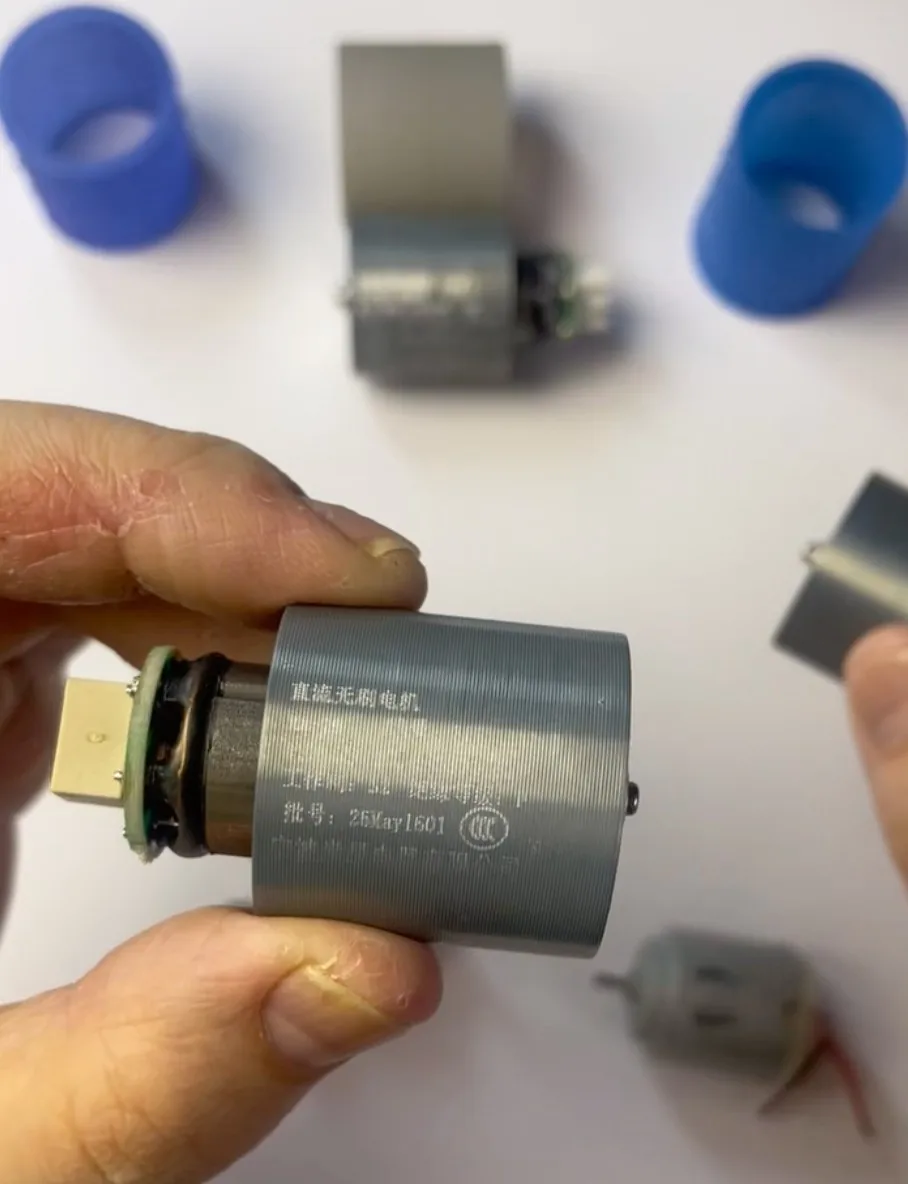
Motor A: Clear Identification Markings
Motors like Motor A carry printed or laser-engraved information including model number, rated voltage, power rating, and batch codes. This allows the sourcing team to:
- Identify the exact tier-1 or tier-2 motor manufacturer.
- Request and match the manufacturer's original specification datasheet.
- Confirm that production units match the approved golden sample.
- Ensure reliable traceability across future production batches.
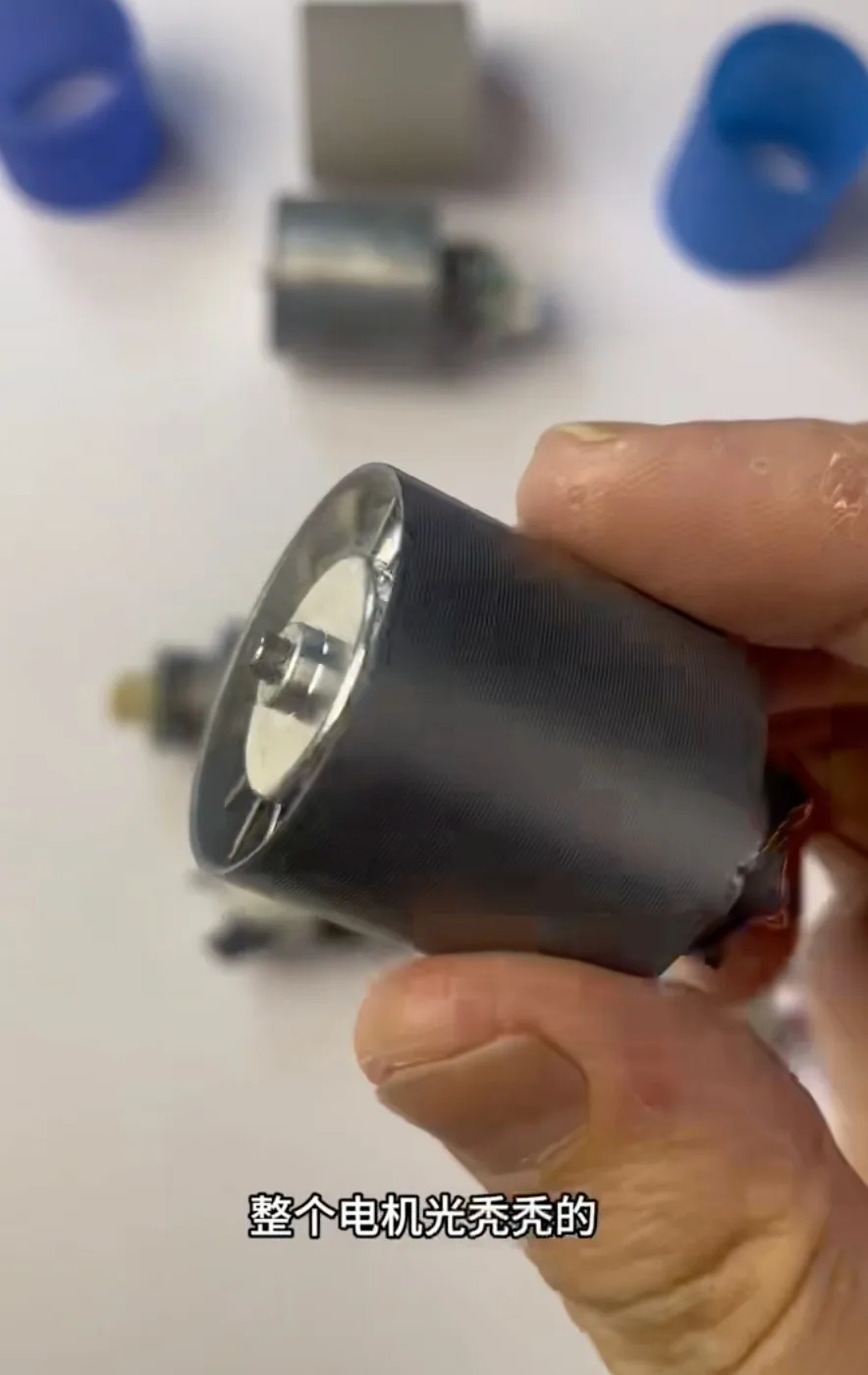
Motor B: No Visible Identification
Other motors (like Motor B) have completely smooth casings with no text. This makes verification more challenging. However, an unmarked motor is not automatically defective or inferior—some factories buy bulk unbranded motor cans to reduce cost. The primary risk is lack of accountability: without markings, component substitution between sample and mass production becomes difficult to detect without teardowns.
3. Does a Model Number Prove That a Motor Is Custom-Made?
No. A clearly marked model number does not prove customization. Standard catalogue motors carry highly detailed model numbers, while genuine custom motors produced under OEM NDAs may carry only an internal customer part code or minimal markings.
Similarly, the absence of markings does not prove an off-the-shelf design. Motor markings should be treated as an initial screening tool—not a definitive conclusion.
4. How to Verify a Motor Beyond Its Appearance
For buyers sourcing small appliances from China, a rigorous verification process combines 5 systematic steps:
Step 1: Request the Official Motor Datasheet
Request the exact datasheet matching the installed motor. Check rated voltage, no-load vs. loaded operating current, rated torque, operating RPM curves, and insulation class (e.g., Class B/F).
Step 2: Measure Physical Dimensions & Tolerances
Measure outer can diameter, total length, shaft diameter, shaft runout tolerance, and mounting screw pitch with a digital caliper. Confirm alignment against engineering CAD drawings.
Step 3: Test Electrical Performance Under Operating Load
Test the motor assembled inside the finished product under real load conditions. In hair dryers, measure backpressure airflow speed (m/s) and temperature rise; in fans, measure power consumption (Watts) across speed modes.
Step 4: Cross-Check Teardown Sample Against Production BOM
Disassemble a random production sample to ensure the motor model, magnet grade, and PCB driver match the approved pre-production golden sample and agreed BOM itemization.
Step 5: Verify Proprietary Customization Claims
If a supplier quotes an extra premium for a "custom-developed motor," ask for tooling documentation, stator winding design drawings, or custom driver firmware records to confirm whether genuine engineering customization took place.
5. What Buyers Should Check Before Approving a Supplier
Supplier Motor Verification Checklist
6. Why Motor Verification Matters for BOM Audits
A Bill of Materials (BOM) is more than a list of names and unit prices. It represents the engineering foundation of product reliability, safety, and unit economics.
Motor verification uncovers critical hidden sourcing risks:
- Unidentifiable Components: White-label motors that cannot be traced back to an accredited manufacturer.
- Spec Inflation: Quoting high-tier motors on paper while installing lower-spec standard platforms inside.
- False Customization Surcharges: Charging custom NRE or higher unit prices for off-the-shelf public motor platforms.
- Batch Inconsistency: Swapping copper windings for copper-clad aluminum (CCA) across production runs.
Final Thoughts: Verify the Motor, Not Just the Claim
When sourcing consumer electronics and small appliances from China, visible motor markings provide initial clues, but they cannot tell the entire story.
At BaiSourcing, we inspect products at the component level to help global brands, retailers, and distributors verify motor architectures, audit BOM costs, and ensure production consistency before mass production.
Need to Verify What's Inside Your Next Small Appliance Order?
BaiSourcing helps buyers examine products at the component level, compare physical findings with supplier claims, and identify potential BOM and specification discrepancies before they become costly sourcing problems.